
Pioneering VACNT: The World’s Most Advanced Vertically Aligned Multi-walled Carbon Nanotube Platform
Limits of standard Carbon Nanotubes
Their intrinsic lack of organization limits CNT capabilities.
Standard carbon nanotubes consist of randomly oriented, entangled tubes, causing uncontrolled agglomeration. They are therefore hard to organize. This limits expected mechanical and electrical performances of materials.
To make them suitable for product integration, further processing is required. They need to be dispersed in matrices or inks before final integration into components.
Key differences – CNT vs VACNT
| Traditional CNT | NAWAH VACNT |
|---|---|
| Randomly Dispersed Additive | Nanostructure Implemented right where they matter the most |
| Few percents in the bulk | Optimal concentration at the interface |
| Limited control | Controlled architecture to maximize the effects |
Advantages of NAWAH’s Vertically Aligned Carbon Nanotubes
Vertically Aligned Carbon Nanotubes (VACNT), by contrast, grow as dense “forests” with their axes perpendicular to a substrate.
They form a pure carbon thin film characterized by high porosity and high external surface area. This structure preserves the nanotubes properties, including electrical, thermal, and mechanical behavior.
VACNT can be integrated exactly where they will have the maximal effect. They enable more controlled interfaces for applications such as electrodes, sensors, and thermal interfaces, or localized mechanical reinforcement at weak interfaces.
VACNTs are also near-perfect scaffolds for other materials to be architectured at nanoscale. By coating individual nanotubes with nanoparticles or continuous, conformal layers, a wide range of new materials can be offered to next-generation electrodes and multi-material assemblies.
From VACNT to multifunctional nanostructures
NAWAH’s Architectured Nanomaterials are manufactured from a unique base of Vertically Aligned Carbon Nanotubes (VACNT)
This unique base is engineered at nanoscale to adjust the width, height and density of the microstructure.
Additionally, specific patterning can be achieved to meet the design requirements, be it at nanoscale or macroscale.
Thanks to VACNT unique properties, applications can be electrically or thermally functionalized for specific needs.
The unique properties of our Architectured Nanomaterials open new horizons across industries to address critical material challenges and enable the development of next-generation products.
NAWAH’s multi-walled vertically aligned carbon nanotubes are architectured during synthesis to meet specific structural requirements.
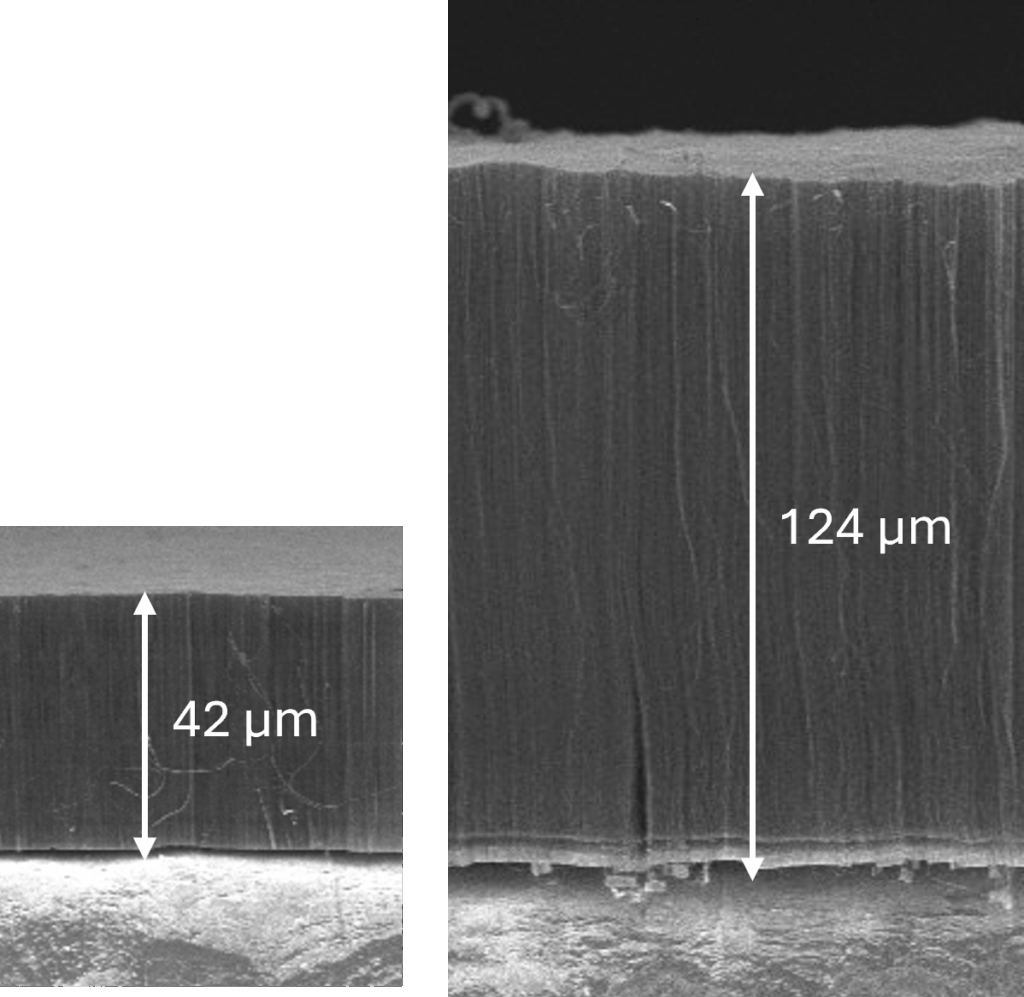
(SEM Images)
Our carbon nanotubes are perfectly vertically aligned
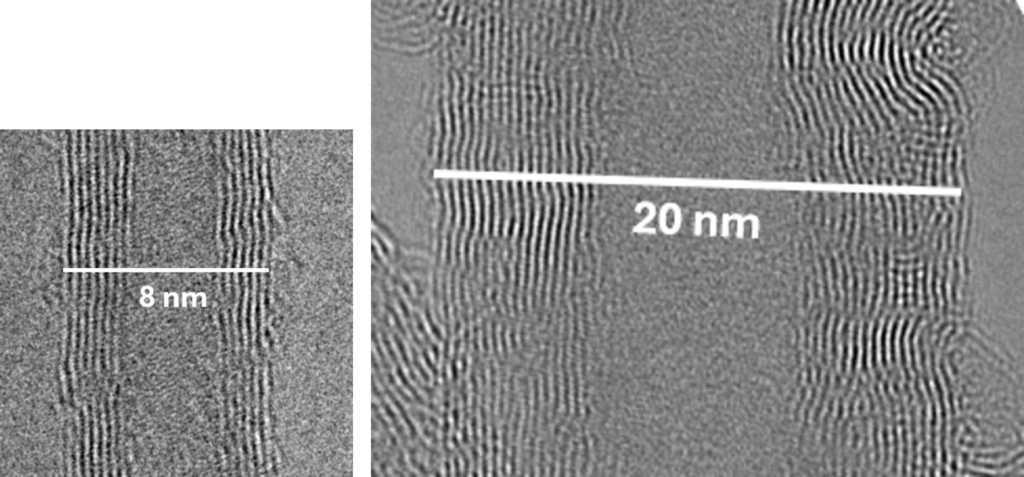
(TEM Images)
Our carbon nanotubes are multi-walled offering superior surface area.
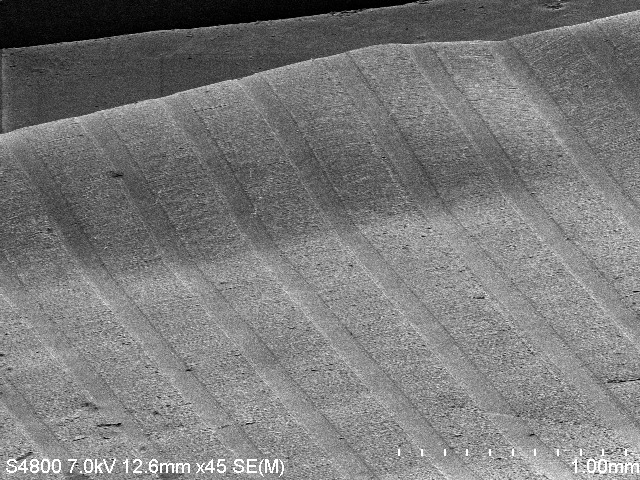
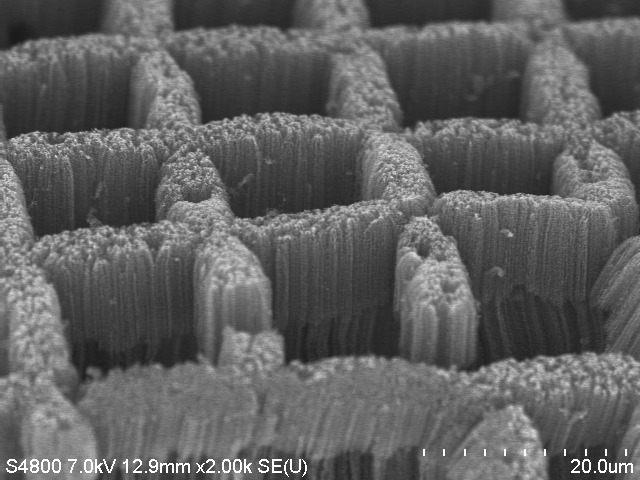
(SEM Images)
Our manufacturing process enables patterned micro-structuration